More results...

  • Cart
  • Checkout

Claire Givens Violins, Inc

Dealers, Makers & Restorers of Fine Violins, Violas, Cellos & Bows

  • Instrument Collection
        • VIOLINS

          • Up to $1,000
          • $1,001 – $2,000
          • $2,001 – $4,000
          • $4,001 – $8,000
          • $8,001 – $12,000
          • $12,001 – $20,000
          • $20,001 – $40,000
          • $40,001 – $60,000
          • $60,001 – $100,000
          • Over $100,001
          • Popular Student Violins
          • Small Violins
        • VIOLAS

          • Up to $1,000
          • $1,001 – $2,000
          • $2,001 – $4,000
          • $4,001 – $8,000
          • $8,001 – $12,000
          • $12,001 – $20,000
          • $20,001 – $40,000
          • $40,001 – $60,000
          • $60,001 – $100,000
          • Over $100,001
          • Popular Student Violas
          • Small Violas
        • CELLOS

          • Up to $2,000
          • $2,001 – $3,500
          • $3,501 – $5,000
          • $5,001 – $8,000
          • $8,001 – $12,000
          • $12,001 – $25,000
          • $25,001 – $50,000
          • $50,001 – $100,000
          • Over $100,001
          • Popular Student Violas
          • Small Violas
  • Bow Collection
        • Violin Bows

          • Up to $300
          • $301 – $600
          • $601 – $1,000
          • $1,001 – $1,500
          • $1,501 – $2,500
          • $2,501 – $5,000
          • $10,001 – $20,000
          • Over $20,001
          • Small Violin Bows
        • Viola Bows

          • Up to $300
          • $301 – $600
          • $601 – $1000
          • $1,001 – $1,500
          • $1,501 – $2,500
          • $2,501 – $5,000
          • $5,001 – $10,000
          • $10,001 – $20,000
          • Over $20,001
          • Small Viola Bows
        • Cello Bows

          • Up to $300
          • $301 – $600
          • $601 – $1,000
          • $1,001 – $1,500
          • $1,501 – $2,500
          • $2,501 – $5,000
          • $5,001 – $10,000
          • $10,001 – $20,000
          • Over $20,001
          • Small Cello Bows
  • Workshop
        • Under the long-time expertise and leadership of Workshop Manager Douglas Lay, the Givens Violins Workshop is staffed by a team of professionally trained violin makers and a full-time Bow Specialist. Our mission is to assist players in obtaining the best sound and response from their instruments and their bows. We encourage you to call us at 612 – 375 -0708 or e-mail us at workshop@givensviolins.com to discuss any questions you may have and to make an appointment. The workshop provides estimates of work needed and maintains a weekly schedule, upholding a reputation for careful, thorough, and high-quality restorations.
        • About The Team

          Meet Doug Lay, Workshop Manager

          Meet Kim Spagnola, Bow Restorer

        • WorkShop

          About the Workshop

          Instrument & Bow Checkups

  • Dipper Early Instruments & Bows
        • DIPPER EARLY INSTRUMENTS & BOWS

          Early Violins

          Early Violas

          Early Cellos 

        • DIPPER RESTORATIONS WEBSITE

          Dipper Restorations Website

        • MEET THE DIPPER STAFF

          Meet The Dipper Staff

        • BAROQUE BOWS

          Baroque Violin Bows

          Baroque Viola Bows

          Baroque Cello Bows

        • CLASSICAL BOWS

          Classical Viola Bows

          Baroque Cello Bows 

          Baroque Cello Bows 

        • POPULAR DIPPER RESTORATIONS BLOGS

          Andrew Dipper Early Bow Models

          Andrew Dipper Early Instrument Restorations

          Getting Started in Early Music

          Historical Instruments & Bows

          Historical Maker Profiles

          “Dear Mr. Puppy” Column

  • Products
        • We carry a wide variety of accessories including strings, mutes, shoulder rests, chin rests, metronomes, music stands, and more. Our string prices are the lowest on the market. Accessories are easily shipped upon request. To make a purchase, please contact us today (link) or stop by our shop, 10am – 5pm, Tuesday - Saturday.
        • Cases

          Books

          Featured Accessories

  • Services
        • As a full-service string shop, Givens Violins offers a wide range of services to our clients through every step of the instrument selection process and throughout your playing career.
        • Trial-Program
          Trade-In Policy
          Financing
          Teacher Gift Card Program

        • Appraisals & Consignment
          Shipping
          Warranty
          Return Policy

  • About Us
    • Meet The Staff
    • Testimonials
    • Community Support
  • Resources
        • Resources

          Instrument Insurance

          Industry Links 

          The Anatomy of a Violin

          The Anatomy of a Bow

          String Instrument Maintenance Guide

          La Voce Newsletter Archives (1997-2009)

        • GIVENS VIOLINS BLOG 

          Advice for New Players, Parents and Students

          Instrument Care & Keeping

          Spotlights on Important Current & Historical Makers

          Interviews with Staff & Professional Musicians

          Humor & History

  • Contact us

More results...

August 27, 2013 by Alan Burke

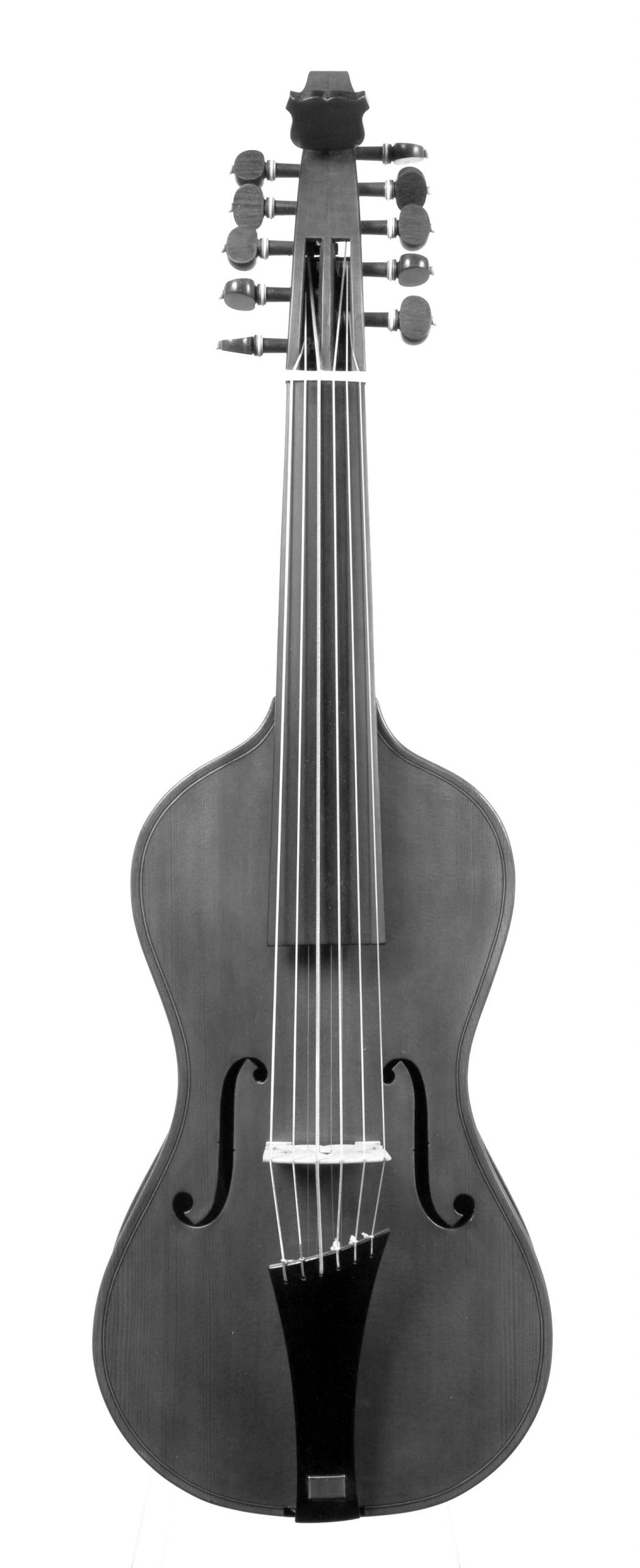
Front view of viola d'amore

Andrew Dipper DVA257 viola d’amore front
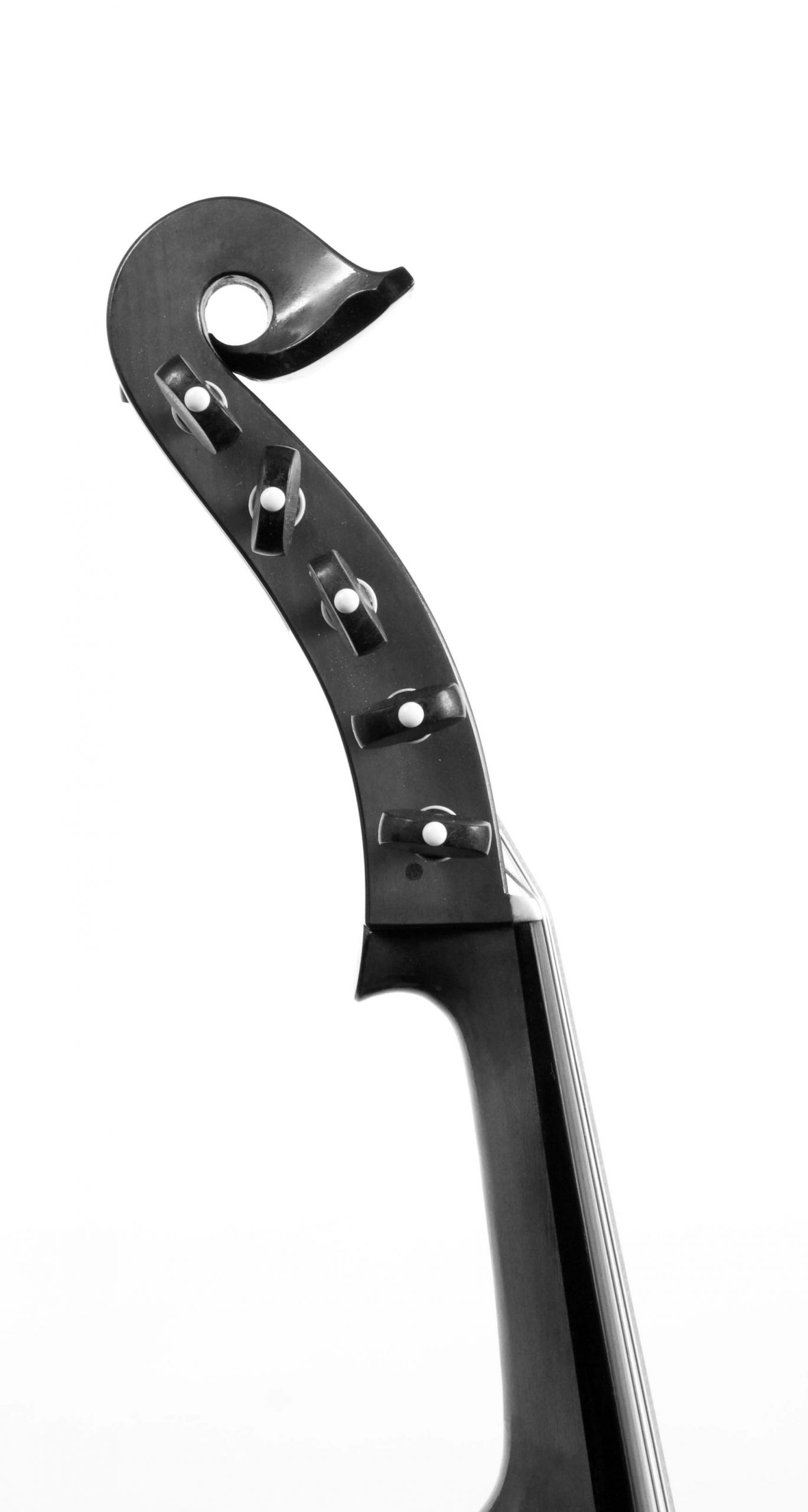
Viola d'amore scroll sideview

Andrew Dipper viola d’amore scroll

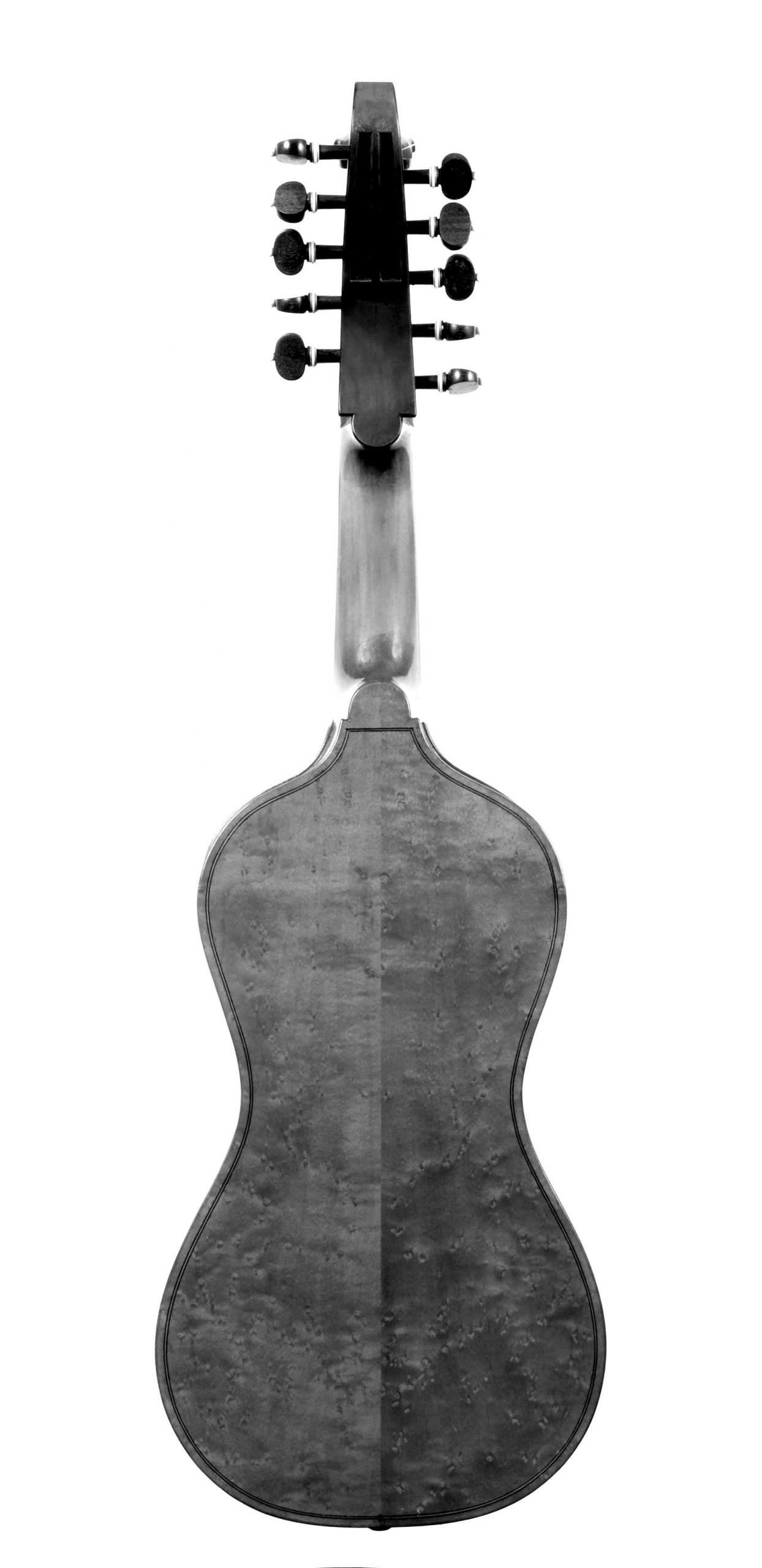
Back view of viola d'amore

Andrew Dipper viola d’amore back


In 1976 as part of my work translating Simone Sacconi’s book, The “Secrets” of Stradivari into English I was asked to review the holdings of the Ala Ponzone collection of Stradivarian material in Cremona. This collection consists of the residue of forms and patterns that were once part of the workshop materials of Antonio Stradivari. Included in this material are a number of forms and patterns for viola d’amore type instruments. Some of these are demonstrative of advances in the design of a novel instrument based on the format of a viola d’amore.

Tartini portrate

Giuseppe Tartini holding his viola d’amore and bow

Antonio Stradivari’s new concept of a corner-less viola d’amore was designed after 1700. The first existing paper patterns for the first instrument are dated 1716 when the master was over sixty years old. This flourishing of new designs is interesting since Tartini was active in Northern Italy as solo violinist and director at St. Antonio in Padua (from 1721 through 1723).  Tartini returned to Padua in 1726. Two years later he founded a school of violin playing, which became known as the School of the Nations. A portrait of him at his time exists in which he is shown playing a fourteen stringed viola d’amore. (See illustration.) A second new model was designed, probably by Antonio and Francesco Stradivari in 1727, and yet another in January 1728.  One has to wonder if the impetus of the new designs came from the activity of Tartini and his search for new violin tones and new bowing techniques, an activity for which the viola d’amore would have been a perfect research tool.

This first dated instrument had a body length of 372 mm and was reminiscent of earlier forms of instruments from the  Brescian school. The necks of these instruments, for which there are multiple patterns, were finished in a simple volute that terminated in a shield-shaped finial. This shield volute applied to bowed instruments is a particular Stradivarian concept and diverges from the normal classic spiral volute of the violin. Some other instrument makers such as Gaspar Bourbon from Brussels used this same design detail but its use was restricted to pochettes, mandolins and soprano lutes. It can occasionally be seen on instruments by the Milanese and Nuremberg makers and was copied much later by the Viennese.
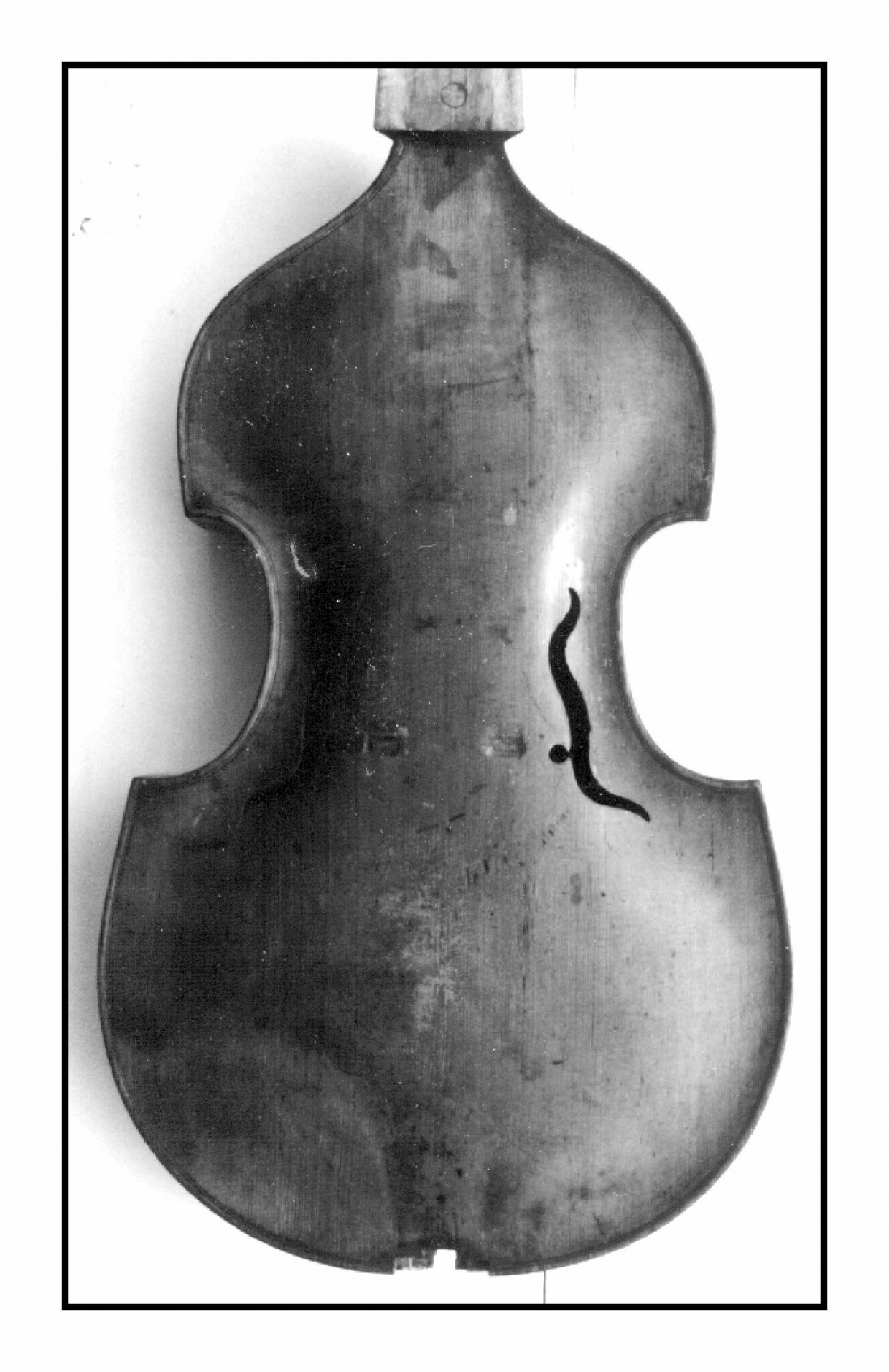
Stradivari sons viola d'amore

Stradivari’s sons, viola d’amore

The late Stradivari violas d’amore are usually designated as twelve strings models, six metal wire strings running under the fingerboard and six plain gut and over-spun gut strings running on the fingerboard, whereas the earlier models often only have ten peg holes designated and may have been divided unequally with only four sympathetic strings. The tailpiece was attached, violin style, to a tail button inserted in the end-block, and the wire strings were probably attached to the saddle area or perhaps to wire hooks on the underside of the tailpiece. If these wire hooks were used, the attachment of the tailpiece was achieved with a wire loop in order to keep the tuning of the under-strings stable, which it would not be with a tail-gut of natural gut. In rare circumstances, as with the viola d’amore made by the sons of Stradivari in 1727[1], the tailpiece was attached in the English manner by a wooden post which ran through a square hole in its lower end.
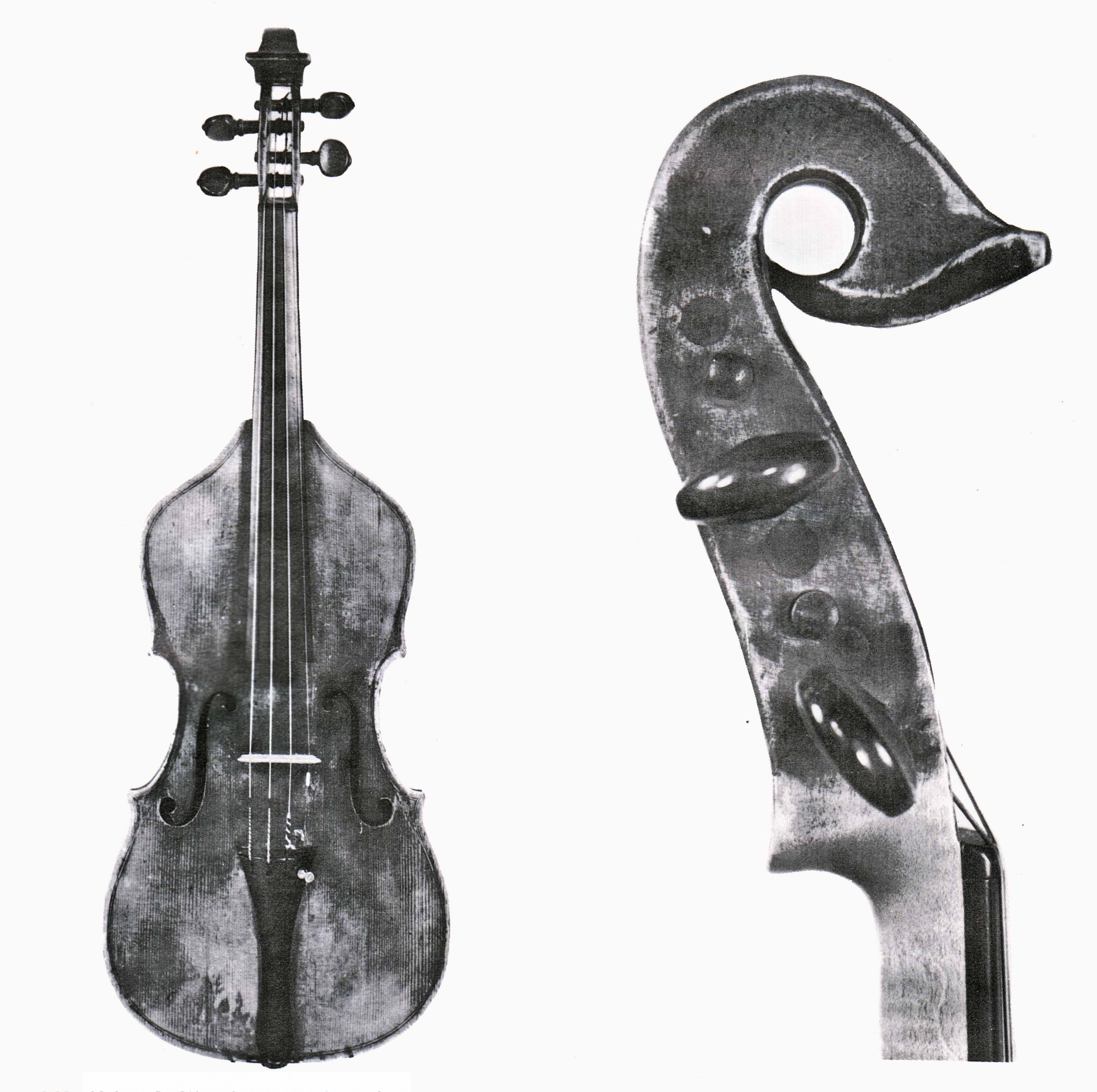
 

Charles Beare viola d'amore

Stradivari viola d’amore altered in the 18th century into violin form. The pegbox altered and corners added.

A notable characteristic of these Stradivari corner-less instruments is that during construction, the ribs, which were usually 5cm high, were pinned to the internal form at the waist position and the two little holes caused by the pins were subsequently filled with a small disc of  maple about 2 mm in diameter. The reason for this pinning procedure was the lack of corner blocks, which ordinarily hold the waist of the instrument to the internal form. The pinning was usually done with a gut thread that was tightened by way of a small block that held a hand tightened tapered peg. This filled pin hole at the waist of the instrument can be seen in the two surviving instruments of this type. One of these violas, in the collection of Charles Beare, is illustrated in S. Sacconi’s book[2]. The other was once owned and played by Joshua Bell. Both of these instruments originally had a rib height of 50 mm but this was cut down in order to make them conform to violin family dimensions. The pin in these cut down ribs is usually 2.5cm from the upper edge.
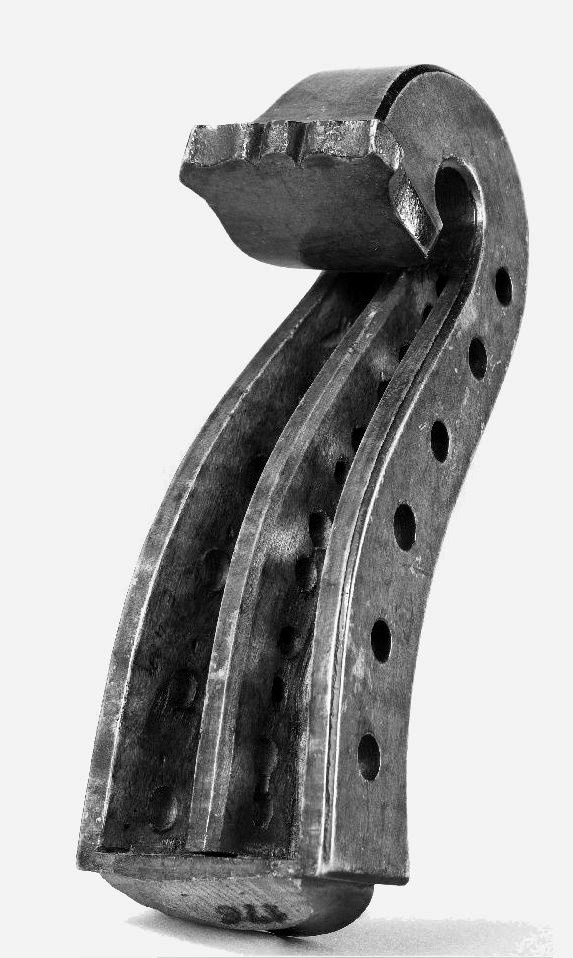
 

Pegbox with dividing wall

Stradivari pegbox with center dividing wall (ex-Gibson viola d’amore)

The chamfers of the shield volute were darkened with ink in a manner similar to Stradivari’s later violins, which must have given these instruments a somewhat funereal look when they were new. This ink lining can be seen perfectly in the head of a viola d’amore which is in the collection of the Paris Conservatoire. This peg head has the unusual feature that the peg-box has a dividing wall running down its center, either to enable the wire under-strings to be kept separate from the gut playing strings, or to allow more pegs to be placed in a smaller pattern of peg-box. This feature is sometimes found on the instruments with sympathetic strings known as Baritone viols.


It is strange to think that Antonio Stradivari, who was responsible in part for the design of the modern violin, should have designed other types of instruments of which there are few traces left. It seems logical that his genius, when applied to other instruments should have produced superb instruments but we have only small scraps of paper to identify the instruments that were in the design process or for which samples only had been produced.


The paper patterns that make up the accoutrements used in the construction of the instrument encode various details about the construction of the instrument. The significant patterns for the viola d’amore that I made were two paper body outlines and several paper outlines of necks and scrolls. What intrigued me about the design was that it was a forward looking concept that seemed to come out of the early part of the nineteenth century instead of the eighteenth.  The corner-less design reminiscent of the instruments of Chanot and the neck patterns with shield scrolls similar to Viennese work of the 1800s led me to think that these forms represented a truly novel departure from the normal Stradivarian concept and were a specific attempt to create a new market for an innovative form of instrument.

To be continued…



[2] The Secrets of Stradivari, page 226, Figs 161. 162.


Filed Under: Andrew Dipper’s Restoration Work

Contact

1201 Marquette Ave. Suite 150
Minneapolis, Minnesota 55403
Directions

Phone: 612-375-0708 or
800-279-4323
Fax: 612-375-0096
cgivens@givensviolins.com

Contact Us

Connect With Givens

Sign up for our Newsletter

Select list(s) to subscribe to

Hours

Tuesday – Saturday
10:00 a.m. – 5:00 p.m.

612/375-0708 

Parking

Parking is available at: The Plaza Ramp and the Hilton Hotel Ramp (11th Underground Ramp). Click here for details.

Quick Links

Job Opportunities

Our Mission

Site Map

FAQS


Translate Our Site

Sphinx Partnership

Givens Violins is a proud Partner of the Sphinx Organization!- Transforming lives through diversifying the arts.

Our Affiliations

Accessibility Statement

Review us on : Google

Claire Givens Violins Inc. © 2026
Developed by EMOD, LLC
  • Home
  • Directions
  • Parking
  • Blog
  • oldContact Us
  • Workshop
  • Services
    • Trial Program
    • Trade-In Policy
    • Appraisals
    • Consignment
    • Instrument & Bow Checkups
    • Accessories
    • Teacher Gift Program
    • Financing
    • Shipping
    • Warranty
    • Return Policy
  • About Us
    • Workshop
    • Meet The Staff
    • Testimonials
    • Community Support
    • Our Mission
    • Job Opportunities
  • Resources
    • Insurance
    • Industry Links
    • String Instrument Maintenance Guide
    • The Anatomy of the Violin – Learn about the different parts of the violin
    • Anatomy of a Bow – The Ultimate Guide to Violin Bows
    • Blog
    • FAQs
    • La Voce Newsletters
    • Sitemap
  • Inventory
    • Violins
    • Violas
    • Cellos
    • Violin Bows
    • Viola Bows
    • Cello Bows
    • Small Instruments
    • Small Bows
    • Early Instruments & Bows
    • Books
    • Cases
  • Dipper Restorations
    • Inventory
      • Early Instruments & Bows
        • Early Instruments
          • Violins
          • Violas
          • Cellos
        • Early Bows
          • Violin Bows
          • Viola Bows
          • Cello Bows
          • Bass bows
    • Dipper Restoration Staff
    • Projects
    • Links
    • Popular Dipper Restoration Blogs
      • Mr Puppy blog
      • Restoration Blog
      • Bow Model Blogs
  • Cart
    • Checkout

×

Please inquire about pricing

Thank you for your inquiry. We will contact you shortly.